Staying Alive
Pandemic
Read time: 3 minutes
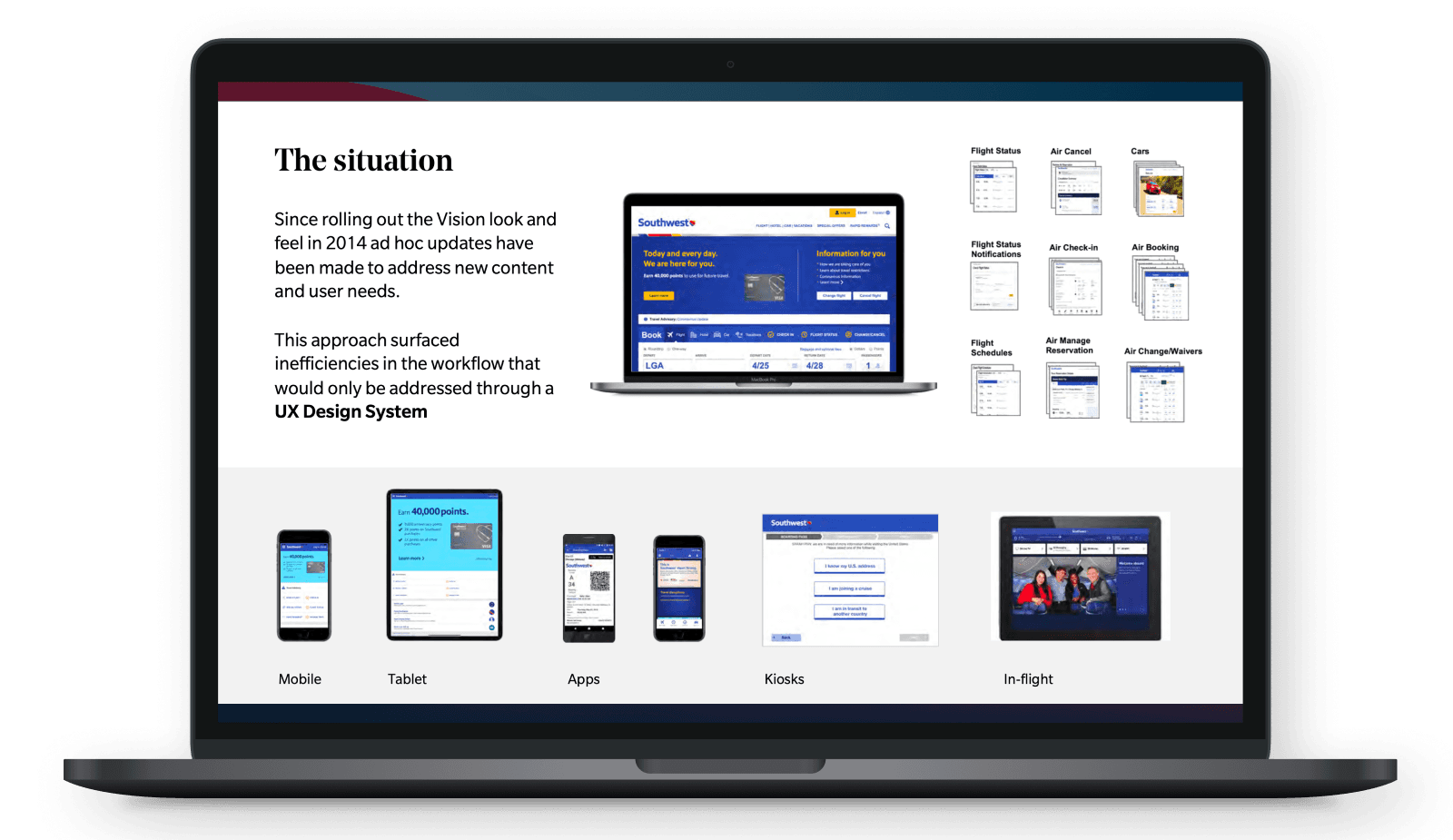
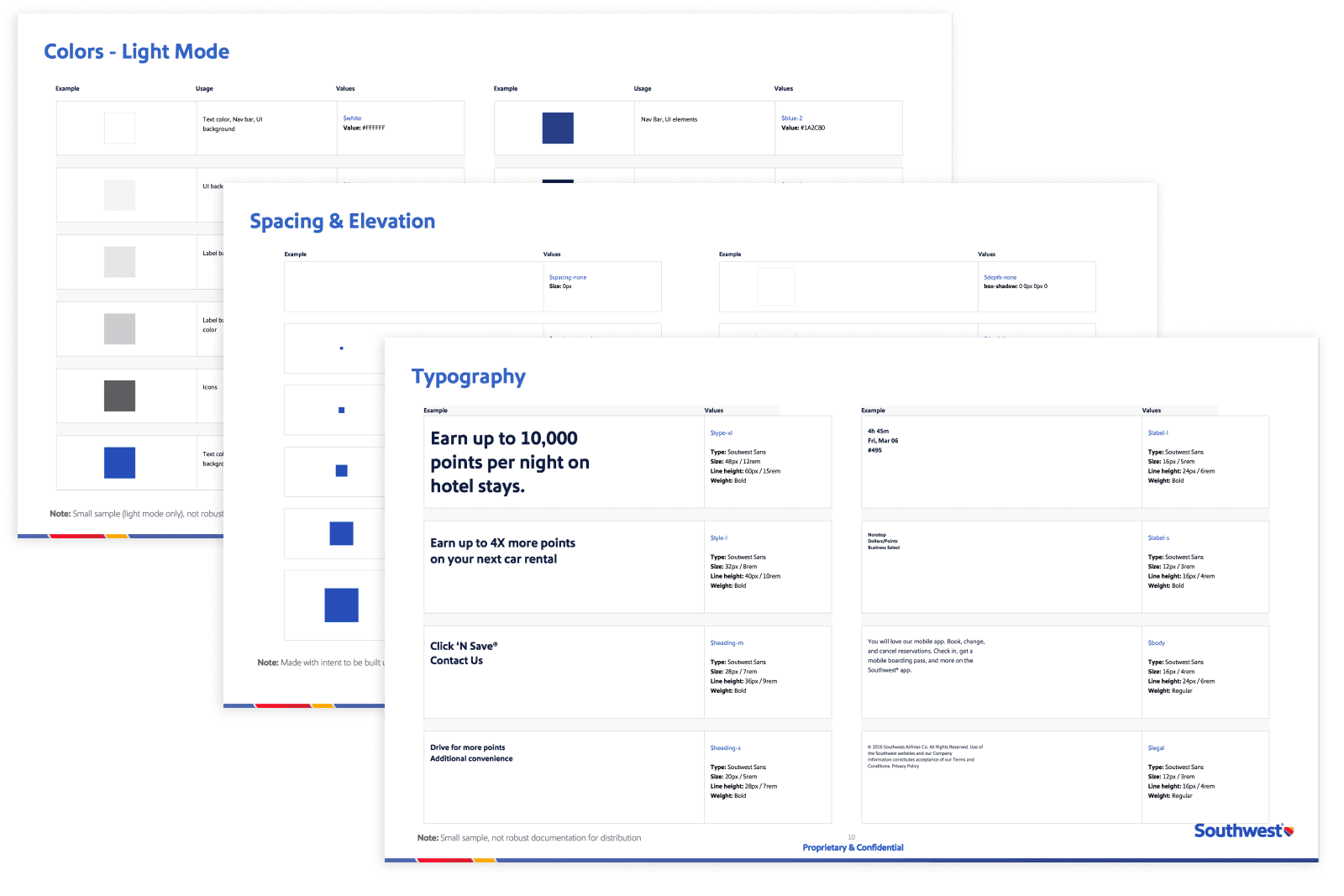
When the brand director signed off, things started moving. I got time with Lippincott, one of our brand agencies, to help lay the foundations of the system — a grid at four breakpoints, a typography system, and an expanded color palette that finally broke free from the constraints of Pantone and CMYK values.
Then the pandemic hit. The engagement ended a week after the kickoff.
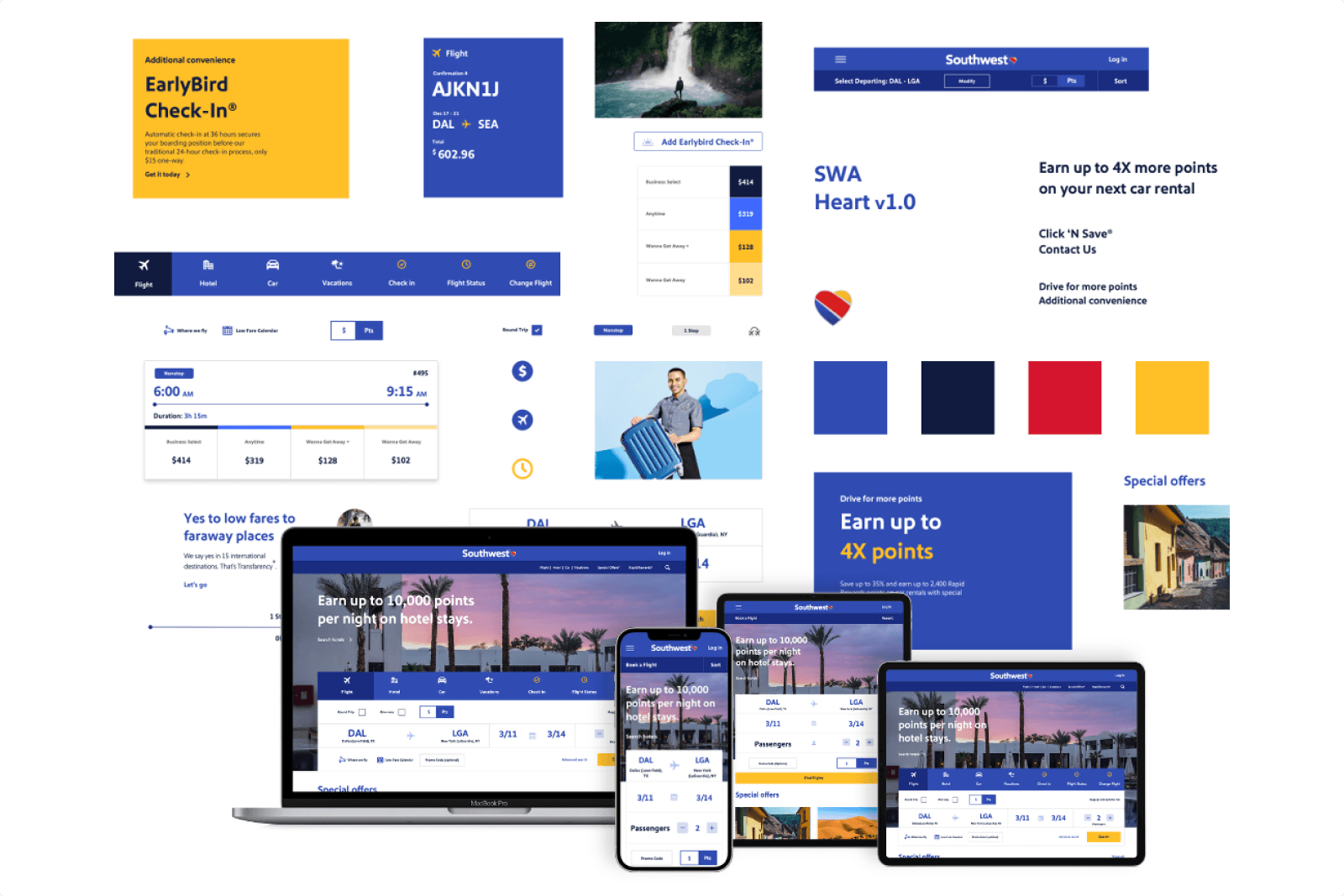
I thought I was going to lose the whole thing. Aviation didn't pause, it collapsed, and Southwest was in survival mode like every other carrier. But the foundations work wasn't wasted — even incomplete, it gave us a real color system, typography, and grid philosophy to build on, and I turned that into a shared component library so the design team, at minimum, was working from the same set of pieces.
That library is what kept things alive through the next year. When rumors started that we'd try our first fully responsive project, my leader allowed me to take those foundations and a small group of us to prove it on something low-stakes: a flight status lookup, a two-page flow with nothing riding on it. That's the project that got our engineering partners genuinely excited — there'd already been appetite on the technology side to build reusable components once the codebase moved to React, they just hadn't had the design-side partner or the framing to make the case. We even pitched a version of it at an internal innovation event, using a components tool one of our engineers had built — it didn't win (it saved cost, not revenue, and revenue is what wins those rooms), but it's the project that turned "maybe" into an actual partnership.
That's also when I connected with a senior technology manager, through nothing more formal than a comment in a weekly one-on-one that I was spinning my wheels — I could make everything look the same, but I couldn't make it be the same without engineering. From there, we synced every sprint, built the case together, and he got me in front of his own leadership. The argument I made there was never abstract: efficiency, reduced rework, faster delivery with fewer people. Southwest's culture runs on cost discipline, so I spoke that language. It landed slowly.